
Basics
Perfume Notes Explained: Top, Heart and Base in Plain English
Every fragrance is a story told in three chapters. Once you understand the pyramid, shopping for perfume gets far easier.
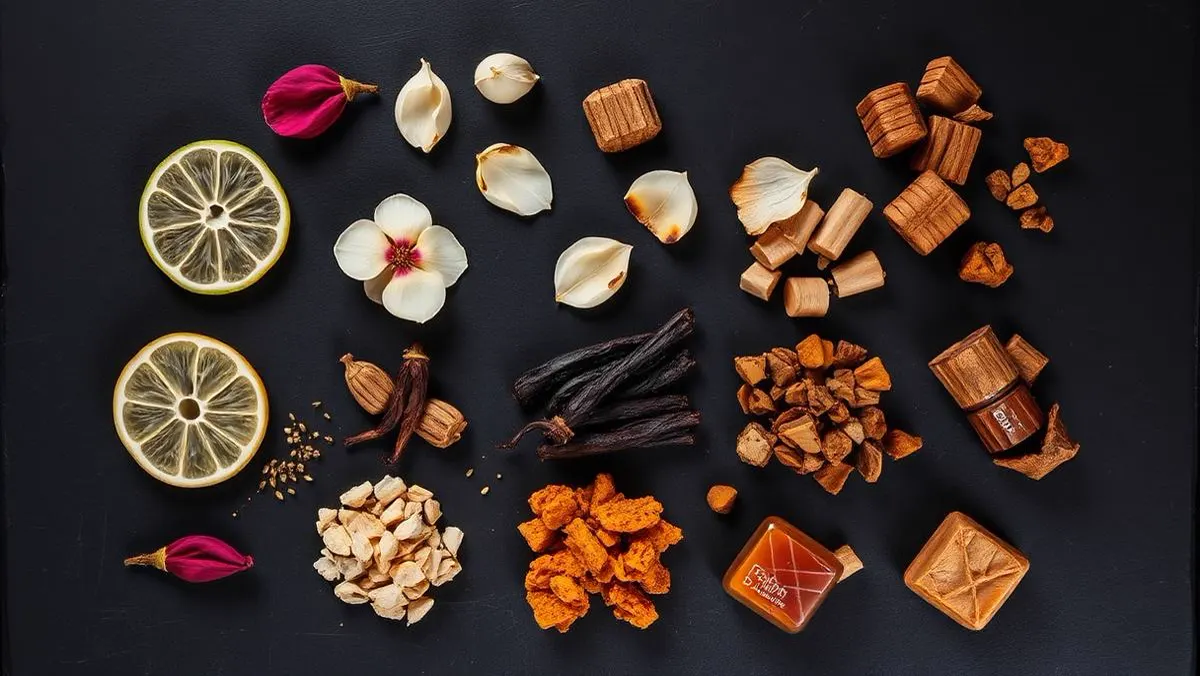
Every perfume you have ever smelled changes while you wear it. That is not your nose playing tricks on you, it is the note pyramid doing its job, and once you understand how it works, shopping for fragrance stops feeling like guesswork and starts feeling like reading a map.
Quick answer
If you only read one section, read that one. Everything else in this guide is about putting that idea to practical use, because knowing the theory is not much good if you cannot use it standing in front of a shelf full of bottles.
What perfume notes actually are
A note is simply one smell inside a perfume. Lemon is a note. Rose is a note. Vanilla is a note. A finished fragrance usually contains somewhere between fifteen and sixty of them, blended so carefully that you rarely notice any single ingredient on its own. What you smell as one unified scent is actually a small orchestra playing at once.
Perfumers sort these notes into three layers, commonly called top, heart and base. It is worth saying clearly that these layers are not physically stacked inside the bottle like paint in a tin. They are sorted by volatility, which is a fancy way of saying how quickly each ingredient evaporates once it meets the warmth of your skin. Light molecules fly off first, heavy ones cling on for hours. That is the entire mechanism behind the way a fragrance seems to change on you over the course of a day.
This structure is usually drawn as a pyramid because top notes are the widest and most immediately obvious part of the fragrance, heart notes sit in the middle, and base notes form the narrower foundation that everything else rests on. It is a useful picture, but do not take it too literally. In reality all three layers are present from the first spray, just in different concentrations that shift as the minutes pass.
Top notes: the first ten minutes
Top notes are what hits you the second you spray. They are built from the lightest, smallest molecules in the formula, so they burn off fast, usually within five to fifteen minutes. Their job is to make a strong first impression on the way out the door, not to represent the fragrance's true character.
- Citrus: lemon, bergamot, grapefruit, mandarin. Bright and zesty, the quickest of all to disappear.
- Light fruits: apple, pear, blackcurrant. Juicy, sharp and cheerful.
- Fresh herbs: mint, basil, lavender. Green and a little sharp on the nose.
- Light spices: pink pepper, cardamom. A gentle tingle rather than any real heat.
This is exactly why the perfume you loved on the shop counter can smell like a different bottle an hour later. You bought the top notes on a hot afternoon and met the heart notes on the bus ride home. Always wait before you judge a fragrance, and never make a full bottle decision from the first two minutes on a testing card.
Heart notes: the real personality
Heart notes, sometimes called middle notes, arrive as the top notes fade and typically stay for roughly two to four hours. This is the part of the fragrance most people actually recognise and remember as the scent, because it is where the perfume settles into what it is genuinely trying to say about you.
- Flowers: rose, jasmine, ylang ylang, tuberose, orange blossom.
- Warm spices: cinnamon, nutmeg, clove, saffron.
- Green notes: fig leaf, violet leaf, tea.
- Soft fruits: peach, plum, lychee.
If the top note is the handshake, the heart note is the conversation. It is the part people remember about you when you have already left the room.
It is also the layer that tends to determine whether a scent reads as feminine, masculine or genuinely unisex to Western noses, because floral, spicy and green accords carry so much of that cultural weight. None of that should stop you wearing whatever you like, but it does explain why heart notes are the section of the pyramid worth paying closest attention to when you are deciding whether a fragrance actually suits you.
Base notes: the long goodbye
Base notes are built from the heaviest molecules in the blend. They emerge after roughly half an hour, sit underneath everything else, and can still be detectable on your skin twelve hours later or longer. They also physically slow down the evaporation of the lighter notes sitting above them, which is why a fragrance with a strong, resinous base tends to last far longer overall than one built on citrus and musk alone.
- Woods: sandalwood, cedar, vetiver, oud.
- Resins: amber, labdanum, benzoin, frankincense.
- Sweet bases: vanilla, tonka bean, caramel, praline.
- Animalic and musky notes: musk, ambergris, leather, civet accords.
If you have ever pulled a jumper out of the wardrobe the next morning and caught a faint trace of yesterday's perfume, you were smelling base notes. Nothing else in the formula survives that long, which is why base-heavy fragrances are usually the ones people describe as long lasting.
How to read a note pyramid
Brands print the pyramid on the box, the counter card or the product page. The trick most people miss is to read it from the bottom up rather than the top down. The base tells you what the fragrance genuinely is underneath the marketing copy. A scent listed with lemon at the top and oud at the base is, in practical terms, an oud fragrance wearing a citrus hat for its first fifteen minutes.
A worked example
Take a typical winter release: bergamot and pink pepper on top, cinnamon and dates in the heart, tonka bean and praline at the base. Read the base first and you already know this will be sweet, warm and heavy. It is a cold-weather scent, likely an evening scent, and it will probably last a long time on skin. You have learned all of that without opening the bottle.
What the middle numbers mean
Some pyramids also list a percentage or an order of dominance rather than a simple three-tier split. Treat these as a rough guide to which ingredients are doing the heavy lifting, not as an exact recipe. Perfume houses rarely publish their real formulas in full, for entirely sensible commercial reasons.
Why the same notes smell different on people
Skin is not a neutral surface. Oily skin holds fragrance molecules for longer and tends to push sweet, resinous notes forward. Dry skin lets molecules evaporate faster, which can make a scent feel sharper and considerably shorter lived. Diet, medication, hormones, body temperature and even the soap you used that morning all nudge the final result in one direction or another.
This is the single best argument for testing fragrance on your own skin rather than on a paper strip. Paper shows you the blend as the perfumer designed it in a lab. Your wrist shows you the truth of how it will actually behave on your particular chemistry, which is the only version that matters to you.
Using notes to shop smarter
- Write down three notes you already love and search specifically for perfumes that list them in the heart or base, not just the top.
- If longevity matters to you, look for a base built on woods, resins or vanilla rather than musk alone.
- For hot weather, favour citrus and aquatic top notes sitting on a light woody base so the scent stays crisp rather than turning cloying.
- For cold weather, lean towards spice, amber and gourmand bases, since cold air mutes lighter notes almost completely.
- Never buy a full bottle from a single paper strip test. Wear a sample for one full day before committing.
| Layer | Typical lifespan | What it's built from | What it tells you |
|---|---|---|---|
| Top notes | 5 to 15 minutes | Citrus, light fruit, fresh herbs | First impression only |
| Heart notes | 2 to 4 hours | Florals, spices, green notes | The scent's real character |
| Base notes | 8 to 12+ hours | Woods, resins, musks, vanilla | How long it will last |
Common mistakes to avoid
The first mistake is smelling too many perfumes in one visit. After the fourth or fifth, your nose stops sorting them properly and everything starts to blur into the same vague blob of sweetness. Three fragrances is the sensible limit for one session, with a short break between each so your nose can reset.
The second mistake is rubbing your wrists together after spraying. That friction generates heat, which crushes the delicate top notes and forces the fragrance to open faster and flatter than it was designed to. Spray it, then simply let it dry undisturbed.
The third mistake is trusting a printed note list as if it were a strict ingredient contract. Brands sometimes list notes to describe a mood or an impression rather than the literal raw material inside the bottle. A pyramid is a strong clue about what to expect, not a legal guarantee, so use it alongside your own nose rather than instead of it.
Matching notes to the season
Once you can read a pyramid, seasonal shopping becomes far easier. Warm air amplifies heavy, sweet and resinous notes to the point of overwhelming a room, which is why a gourmand vanilla bomb that feels lovely in December can feel exhausting in July. Cold air does the opposite, muting delicate citrus and aquatic notes almost to nothing within an hour. Matching the pyramid to the temperature outside is one of the quickest upgrades you can make to how a fragrance actually performs for you.
Using note knowledge to layer fragrances
Understanding notes also opens the door to layering two fragrances deliberately rather than by accident. The safest approach is to pair a scent with a strong, simple base against one with a more complex top and heart, so the base carries the combination through the day while the top adds nuance early on. Layering a heavy oud base with a bright citrus top from a different bottle, for instance, can create something that neither fragrance achieves alone.
Start with a single spray of each and build up gradually. It is far easier to add more fragrance than to remove it once it is on your skin, and a subtle, well balanced layer will always read better than an overpowering cloud that follows you around a room.
Frequently asked questions
- How long do top notes last?
- Top notes usually last between five and fifteen minutes. They are made of the lightest molecules in the blend, so they evaporate first and are gone before the fragrance settles into its true character.
- Are base notes the strongest part of a perfume?
- Base notes are the longest lasting rather than necessarily the loudest. They can stay on skin for eight to twelve hours and beyond, and they slow down the evaporation of the lighter notes sitting above them in the pyramid.
- Why does my perfume smell different after an hour?
- The top notes have evaporated and the heart notes have taken over as the dominant part of the blend. This is entirely normal and intentional, which is why it pays to wait at least thirty minutes before judging any new fragrance properly.
- Can I choose a perfume just from the note list?
- A note list is a useful filter but never a guarantee. Two perfumes can share almost identical note lists and still smell completely different, depending on the quantities used and the quality of the raw materials behind each name.
- Do top notes matter if they disappear so quickly?
- Yes, because they shape the crucial first impression and set expectations for what follows. A harsh or unpleasant opening can put people off before the heart and base notes get a chance to show what the fragrance is really about.
- What is a fougère or a chypre note family?
- These are broader accord families rather than single notes, built from combinations like lavender, oakmoss and coumarin for a fougère, or bergamot, oakmoss and labdanum for a chypre. They describe the overall structure rather than one specific ingredient.
- Why do two people wearing the same perfume smell different?
- Skin chemistry, oil levels, diet and even hormones all change how quickly notes evaporate and which ones get amplified. That is why testing on your own skin always beats trusting how a fragrance smelled on somebody else.
Keep reading
Basics
EDT vs EDP: What the Difference Really Means on Skin
Two letters on a bottle change the price, the strength and the way a scent behaves on your skin. Here is what they mean.
How to
How to Make Perfume Last Longer: 12 Fixes That Genuinely Work
Most people lose hours of wear through small mistakes. Fix these and the same bottle suddenly performs better.